SOP Reference: MWS-M01-L9
Lesson 9: Harvest Hygiene & Chain of Custody
Sterile collection and transport SOPs for pharmaceutical honey batches
From Hive to Hospital: The Critical Transition
Honey harvest represents the critical juncture where months of pharmaceutical production protocols either succeed or fail. A single contamination event during extraction, a breakdown in documentation, or an untracked batch renders all upstream efforts worthless. The harvest operation transforms honey from a hive product into a pharmaceutical intermediate requiring the same chain-of-custody rigor applied to prescription medications.
Unlike food-grade honey operations where harvest involves bulk extraction and commodity pooling, pharmaceutical honey maintains individual batch identity from specific colonies through final packaging. Every kilogram must trace back to documented source hives with complete records of site conditions, disease management, forage composition, and all other parameters affecting pharmaceutical suitability.
This lesson details the sterile collection protocols, documentation requirements, and custody transfer procedures that establish pharmaceutical traceability from the moment honey leaves the hive.
Pre-Harvest Preparation
Timing and Maturity Assessment
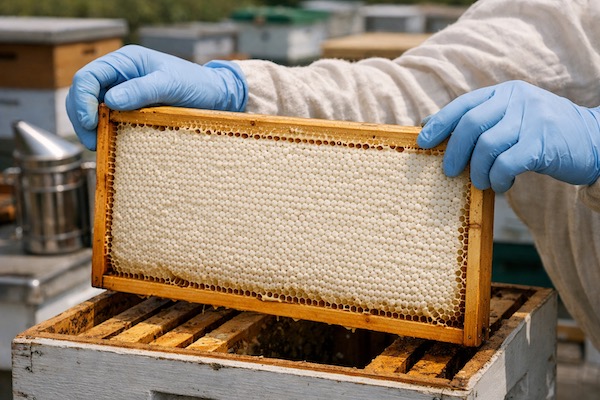
Pharmaceutical honey harvest occurs only when honey reaches full maturity, indicated by complete capping of cells and moisture content below 18%. Premature harvest captures honey with elevated moisture that supports fermentation, rendering it unsuitable for pharmaceutical applications. Extended delay allows bees excessive time to work older honey, potentially increasing HMF through in-hive temperature exposure.
Maturity Verification Protocol
- Visual Assessment: Minimum 90% of cells fully capped with white wax caps
- Refractometer Testing: Sample honey from multiple frames, target moisture below 17%
- Shake Test: Invert uncapped frames sharply - no honey should drip from properly ripened cells
- Temperature Consideration: Avoid harvest during heat waves when in-hive temperatures accelerate HMF formation
Equipment Sterilization
All harvest equipment undergoes full sterilization cycle before each harvest operation. This includes extraction equipment, transport containers, uncapping tools, and any surface that contacts honey during collection.
- Extractor Tanks: Stainless steel extractors steam-cleaned then sanitized with 70% ethanol
- Uncapping Equipment: Knives and forks autoclaved at 121°C for 20 minutes
- Collection Buckets: Food-grade stainless steel buckets steam-sterilized and air-dried
- Filters and Screens: Stainless mesh filters autoclaved before use
- Transport Containers: Food-grade HDPE buckets with tamper-evident lids, cleaned and sanitized
Personnel Preparation
Harvest personnel undergo same hygienic preparation protocols as pharmaceutical production workers.
- Remove all jewelry and watches
- Thoroughly wash hands and forearms with antimicrobial soap
- Don clean cotton harvest suits dedicated to pharmaceutical operations
- Wear food-service grade hairnets or caps
- Don powder-free nitrile gloves, replace between frame handling
- No eating, drinking, or tobacco use within harvest zone
Frame Removal and Transport
Hive Opening Protocol
Frame removal occurs systematically to maintain honey identification and prevent cross-contamination between colonies.
- Colony Identification: Verify hive number matches harvest schedule and documentation
- Bee Removal: Use organic smoker fuel or bee brush, never chemical bee escapes or repellents
- Frame Inspection: Examine each frame for foreign material, dead bees, or contamination before removal
- Batch Segregation: Frames from each super remain identified to their source super and colony
- Immediate Covering: Frames transfer into covered transport boxes to prevent environmental contamination
Transport Container Specifications
Frames transport from apiary to extraction facility in dedicated containers that prevent contamination during transit.
| Container Feature | Specification | Purpose |
|---|---|---|
| Material | Food-grade plastic or stainless steel | Non-leaching, cleanable surfaces |
| Closure | Tight-fitting lids with seals | Dust, insect, and contamination exclusion |
| Identification | Batch labels with hive numbers | Maintains chain of custody |
| Temperature Control | Insulated for short transport | Prevents excessive heating |
Field Documentation
Comprehensive records begin at the moment of frame removal from hives.
- Date and time of harvest initiation
- Personnel involved in harvest operation
- Weather conditions (temperature, precipitation)
- Colony identification numbers
- Number of frames removed per colony
- Estimated weight of honey per colony
- Visual assessment notes on honey color and consistency
- Refractometer moisture readings
- Ambient temperature during harvest
- Transport container batch numbers
Extraction Facility Operations
Facility Requirements
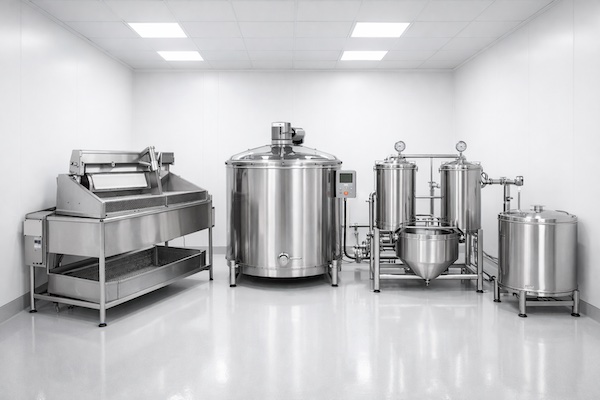
Honey extraction occurs in dedicated pharmaceutical processing spaces meeting food safety standards equivalent to commercial kitchens with enhanced sanitation requirements.
Facility Specifications
- Floor Surface: Sealed concrete or industrial epoxy, cleanable and non-porous
- Wall Surface: Smooth, cleanable surfaces free of cracks or crevices
- Lighting: Shielded fixtures preventing glass contamination if breakage occurs
- Ventilation: Filtered air exchange preventing dust and insect entry
- Pest Exclusion: Screened doors and windows, sealed entry points
- Plumbing: Hot and cold running water for equipment washing
- Temperature Control: Climate control maintaining 20-30°C for optimal honey flow
Uncapping Protocol
Wax cappings must be removed completely to allow honey extraction while minimizing wax contamination of final product.
- Frame Temperature: Allow frames to warm to room temperature (20-25°C) for easier uncapping
- Sterilized Tools: Use autoclaved uncapping knives or electrically heated knives cleaned between uses
- Complete Cap Removal: Remove entire wax cap thickness, not just surface layer
- Capping Collection: Cappings fall into dedicated collection tray for separate processing
- Frame Inspection: Verify no foreign material visible before loading into extractor
- Batch Tracking: Maintain frame identification through uncapping and extraction
Centrifugal Extraction
Honey extracts through centrifugal force in stainless steel extractors operated at controlled speed to prevent comb damage while ensuring complete honey removal.
| Parameter | Specification | Rationale |
|---|---|---|
| Extractor Material | 304 or 316 stainless steel | Corrosion resistance, no leaching |
| Rotation Speed | Variable 200-400 RPM | Gradual speed increase prevents comb damage |
| Extraction Duration | 2-4 minutes per side | Complete extraction without equipment stress |
| Batch Size | Single-colony lots | Maintains traceability |
| Between-Batch Cleaning | Wipe-down with ethanol | Prevents cross-contamination |
Initial Filtration and Collection
Primary Filtration
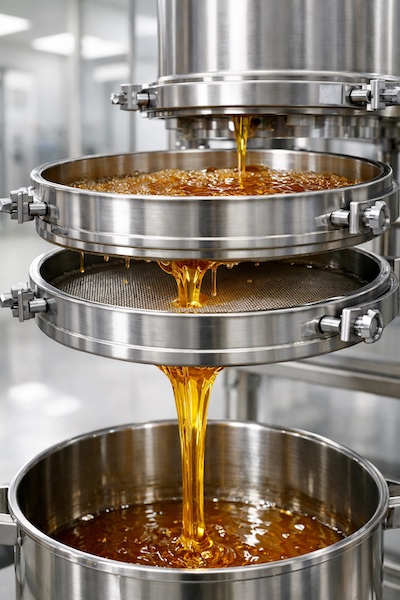
Honey flows from extractor through coarse filtration removing visible wax particles and foreign material while preserving pollen grains essential for botanical authentication.
Filter Specifications
- Primary Screen: 600-micron stainless steel mesh removes large wax chunks
- Secondary Screen: 200-micron nylon mesh removes smaller particles
- Pollen Preservation: Filtration stops at 200 microns to retain pollen for authentication
- No Pressure Filtration: Gravity flow only prevents heat generation and pollen damage
- Filter Cleaning: Between batches, filters rinse with warm water and sanitize
Collection Container Management
Filtered honey collects into food-grade containers that maintain batch identity and prevent contamination during storage.
- Container Preparation: Food-grade HDPE buckets with gasket lids, cleaned and sanitized
- Fill Level: Leave 2-inch headspace for thermal expansion
- Immediate Labeling: Affix batch labels before removing from filling station
- Tamper Evidence: Apply tamper-evident seals across lid-to-bucket interface
- Weight Recording: Weigh each filled container, record net honey weight
Batch Identification and Labeling
Batch Number Assignment
Each pharmaceutical honey batch receives unique identification enabling complete traceability through production, testing, and final disposition.
Batch Number Structure
Pharmaceutical operations use systematic batch numbering encoding critical information:
Format: SITE-YEAR-MONTH-BATCH
Example: NZ01-2025-12-003
- SITE: Two-letter country code plus two-digit site number (NZ01 = New Zealand Site 1)
- YEAR: Four-digit harvest year
- MONTH: Two-digit harvest month
- BATCH: Three-digit sequential batch number within that month
Container Label Requirements
Every container leaving extraction facility carries comprehensive labeling providing batch identity and handling information.
| Label Element | Information Required |
|---|---|
| Batch Number | Unique pharmaceutical batch identifier |
| Harvest Date | Date of extraction (DD/MM/YYYY format) |
| Source Colonies | Hive identification numbers contributing to batch |
| Net Weight | Honey weight in kilograms |
| Container Tare Weight | Empty container weight for verification |
| Handler Initials | Person who filled and sealed container |
| Storage Instructions | Temperature range and handling requirements |
Chain of Custody Documentation
The Pharmaceutical Paper Trail
Complete documentation from hive to final product container establishes the chain of custody required for pharmaceutical traceability. These records demonstrate that every process step occurred under controlled conditions with proper oversight.
Required Documentation Components
Harvest Documentation
- Pre-harvest checklist verifying equipment sterilization
- Personnel hygiene compliance records
- Field harvest log with colony identifications and conditions
- Frame removal records linking frames to source colonies
- Transport log documenting movement from apiary to extraction facility
Extraction Documentation
- Equipment cleaning and sterilization verification
- Extraction log recording process parameters and timing
- Filtration records documenting mesh sizes and flow rates
- Container filling log with weights and batch assignments
- Seal integrity verification (tamper-evident seals applied and documented)
Batch Assembly Records
- Batch composition showing which colonies contributed to each batch
- Total batch weight and container count
- Sampling plan for quality testing
- Storage location assignment
- Transfer of custody signatures
Sample Collection for Testing
Representative Sampling Protocol
Each batch undergoes comprehensive testing before release for pharmaceutical processing. Proper sampling ensures test results represent true batch quality.
Sampling Procedure
- Sample Timing: Collect after filtration but before final containerization
- Sample Size: Minimum 500-gram composite sample per batch
- Container Selection: Sample from multiple containers if batch spans multiple containers
- Homogenization: Gently stir honey before sampling to ensure uniformity
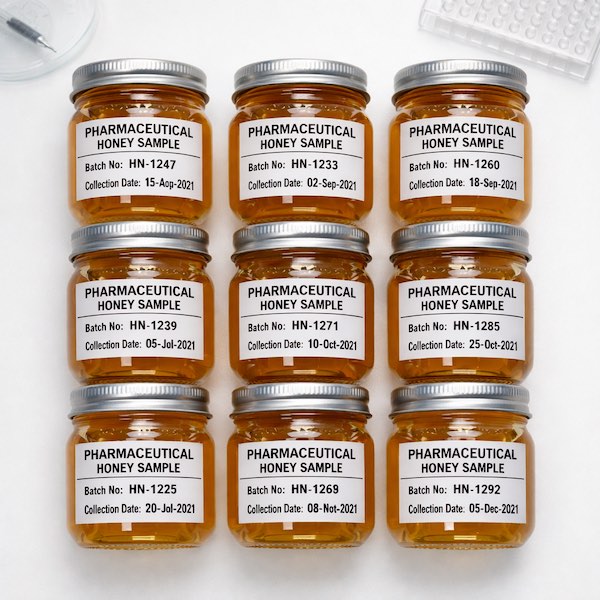
- Sample Container: Use sterile glass jars with metal lids (no plastic)
- Labeling: Label sample containers with batch number, date, and sampler initials
- Storage: Refrigerate samples at 4°C pending laboratory submission
- Chain of Custody: Maintain sample custody documentation through laboratory receipt
Testing Panel
Comprehensive analysis verifies pharmaceutical suitability before batch release.
| Test Category | Specific Parameters | Purpose |
|---|---|---|
| Bioactivity | MGO content, DHA precursor | Pharmaceutical potency verification |
| Purity | 400+ pesticide multi-residue screen | Contamination exclusion |
| Authenticity | Pollen analysis, DNA verification | Leptospermum source confirmation |
| Quality | Moisture, HMF, color, conductivity | Pharmaceutical grade standards |
| Microbiology | Total plate count, coliforms, pathogens | Safety verification |
Storage and Transportation to Processing
Interim Storage Requirements
Raw honey awaits processing in controlled storage preventing quality degradation while test results return from laboratory.
Storage Specifications
- Temperature: 15-25°C constant temperature, avoid fluctuations
- Humidity: Below 60% relative humidity prevents moisture absorption
- Light Protection: Dark storage or opaque containers prevent light-induced degradation
- Pest Control: Sealed facility excluding insects and rodents
- Segregation: Batches stored separately with clear identification
- Security: Limited access, locked facility
Transportation to Processing Facility
Once testing confirms pharmaceutical suitability, batches transfer to processing facility for maturation, sterile packaging, and final pharmaceutical preparation.
Transport Protocol
- Pre-Transport Inspection: Verify seal integrity on all containers
- Transport Vehicle: Enclosed vehicle with temperature control capability
- Secure Loading: Containers secured preventing movement or damage
- Transit Documentation: Bill of lading documenting batch numbers, quantities, origin, destination
- Temperature Monitoring: Data loggers verify temperature maintained during transit
- Custody Transfer: Receiving facility signs for custody transfer upon delivery
- Condition Verification: Recipient inspects seal integrity and container condition before acceptance
Traceability System Integration
Digital Records Management
Modern pharmaceutical operations integrate paper records with digital databases enabling rapid traceability queries and regulatory audits.
Database Elements
- Colony identification linked to geographic coordinates and site conditions
- Disease monitoring history for all source colonies
- Harvest dates and personnel for every batch
- Batch composition showing colony contributions
- All test results linked to batch numbers
- Storage locations and environmental conditions
- Transportation records with custody transfers
- Final disposition (processing, quarantine, rejection)
Audit Trail Requirements
Complete traceability allows bidirectional tracking: forward from any colony to all batches containing its honey, and backward from any batch to all contributing colonies with their complete management histories.
Critical Takeaways
- Harvest occurs only when honey reaches full maturity with moisture below 18%
- All equipment undergoes full sterilization before each harvest operation
- Batch identity maintains through systematic frame tracking from hive to container
- Unique batch numbers enable complete forward and backward traceability
- Comprehensive documentation establishes pharmaceutical chain of custody
- Representative sampling and full testing panel verify pharmaceutical suitability before release