SOP Reference: MWS-M01-L1
Lesson 1: Aseptic Tooling & Sterilization
Protocols for hive tools and smoker hygiene in pharmaceutical-grade apiculture
Clinical Context
In pharmaceutical honey production, every piece of equipment that contacts the hive becomes a potential vector for microbial contamination. Traditional beekeeping tolerates environmental microbes because honey destined for food-grade consumption undergoes pasteurization. Medical-grade honey cannot be heat-treated without destroying its enzymatic bioactivity, making upstream aseptic protocols mandatory.
The contamination risk extends beyond bacterial load. Chemical residues from tool coatings, lubricants, and cleaning agents can leach into comb and ultimately concentrate in honey. A single application of petroleum-based rust preventative can compromise an entire harvest batch when tested for pharmaceutical compliance.
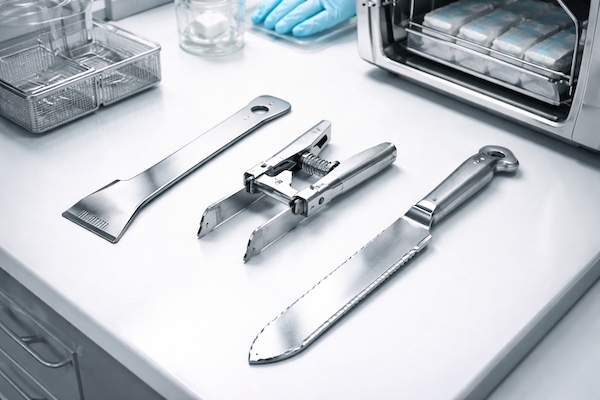
Approved Materials Specification
Primary Tool Materials
All contact surfaces must utilize 316-grade stainless steel. This austenitic chromium-nickel alloy resists both corrosion and contamination while tolerating repeated autoclave cycles without degradation. The 316 designation indicates molybdenum content that provides superior resistance to chloride ion attack during sterilization.
| Tool Category | Material Standard | Coating Prohibition |
|---|---|---|
| Hive Tools | 316 Stainless Steel | No paint, no nickel plating |
| Frame Grips | 316 Stainless Steel | No rubber coatings |
| Uncapping Knives | Surgical-grade 316L | No Teflon coating |
| Queen Excluders | 304 or 316 Stainless | No galvanized wire |
Prohibited Materials
Carbon steel tools are categorically excluded due to oxidation byproducts. Painted or powder-coated implements introduce polymer fragments into the hive environment. Aluminum oxidizes into microscopic particles that concentrate in propolis. Plastic-handled tools release phthalates under solar exposure.
Autoclave Sterilization Protocol
Pre-Sterilization Preparation
- Gross Debris Removal: Tools returning from field operations undergo mechanical cleaning using sterile brushes under running distilled water. Propolis and wax residue must be physically scraped using designated cleaning implements that never contact live hives.
- Detergent Wash: Immerse tools in pharmaceutical-grade alkaline detergent solution (pH 11-12) for 15 minutes. This step emulsifies residual lipids and disrupts biofilm formation. Use only detergents certified free of optical brighteners and fragrance compounds.
- Rinse Sequence: Three successive rinses in distilled water followed by a final rinse in sterile water for injection (WFI). Each rinse must achieve complete detergent removal verified by conductivity measurement below 1.3 microsiemens.
- Air Dry: Tools air-dry on sterile mesh racks in a HEPA-filtered laminar flow hood. No forced-air drying or towel contact permitted.
Autoclave Cycle Parameters
Sterilization occurs in a pre-vacuum autoclave using the following validated cycle:
- Temperature: 121 degrees Celsius (250 degrees Fahrenheit)
- Pressure: 15 PSI (1.03 bar above atmospheric)
- Exposure Time: 20 minutes minimum
- Drying Phase: 30 minutes post-sterilization dry cycle
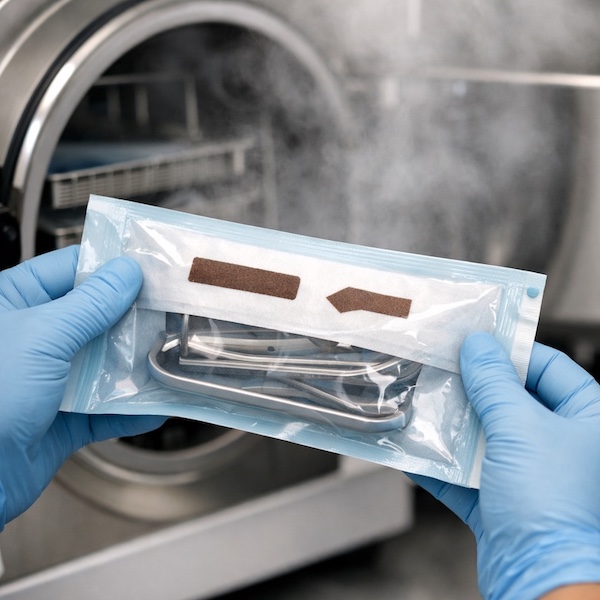
- Biological Indicator: Geobacillus stearothermophilus spore strips must show complete kill
Each sterilization run requires documentation including cycle number, operator initials, biological indicator results, and mechanical printout verification. Tools remain sterile for 30 days when stored in sealed autoclave bags with intact chemical indicators.
Smoker Fuel Specifications
The Contamination Risk
Traditional smoker fuels introduce polycyclic aromatic hydrocarbons (PAHs), volatile organic compounds, and particulate matter directly into the hive atmosphere. Bees exposed to petroleum-derived smoke carry these contaminants on their body surface and deposit them throughout the comb matrix. Subsequent honey accumulates these compounds to levels that fail pharmaceutical testing.
Approved Fuel Materials
Clinical operations require organic, unprocessed fuel sources that combust cleanly without producing toxic residue:
- Organic Pine Needles: Sourced from certified organic forests with documented pesticide-free status. Pine needles must be harvested from living trees, not forest floor litter.
- Organic Cotton Fabric: Untreated, undyed organic cotton cut into strips. No synthetic fibers or fire-retardant coatings permitted.
- Certified Organic Burlap: Pure jute fiber burlap from organic-certified sources. Verify absence of petroleum-based sizing agents.
- Pharmaceutical-Grade Ethanol: 95% ethanol can be used as ignition accelerant but must fully combust before smoker enters hive proximity.
Prohibited Fuel Sources
| Material | Contamination Risk |
|---|---|
| Cardboard/Newspaper | Ink dyes, polymer coatings, adhesives |
| Treated Wood Chips | Pesticide residues, chromated copper arsenate |
| Charcoal Briquettes | Coal tar binders, lighter fluid residue |
| Punky Wood | Fungal mycotoxins, decay metabolites |
| Synthetic Fire Starters | Paraffin wax, petroleum distillates |
Smoker Hygiene Protocol
Between uses, the smoker chamber undergoes burn-off at maximum temperature for 10 minutes to carbonize residual organics. Once cooled, the interior receives mechanical brushing to remove ash deposits. The bellows and nozzle are wiped with 70% isopropyl alcohol and allowed to air dry. Smoker interiors are replaced annually to prevent creosote buildup.
Personal Protective Equipment (PPE)
Contamination Control Through Protective Wear
Clinical apiary operations mandate full-body coverage using materials that prevent both environmental contamination of the beekeeper and hive contamination from the beekeeper. Standard agricultural bee suits made from polyester-cotton blends shed microfibers that embed in propolis. Medical-grade operations require purpose-specific garments.
Approved PPE Components
- Full-Body Suit: 100% organic cotton canvas with double-stitched seams. No synthetic fibers. Suits must be laundered in fragrance-free, dye-free detergent and stored in sealed containers.
- Nitrile Gloves: Powder-free nitrile examination gloves changed between hive inspections. Latex allergies preclude natural rubber use.
- Veil System: Stainless steel mesh veil attached to cotton suit via Velcro-free clips. Nylon mesh veils shed microplastics.
- Footwear: Dedicated rubber boots cleaned with 70% ethanol between apiary sites. No fabric-lined interiors.
Decontamination Between Colonies
Disease transmission between hives occurs primarily through contaminated equipment and PPE. The following protocol applies between each colony inspection:
- Remove and dispose of nitrile gloves in designated waste container
- Spray boot exteriors with 70% ethanol solution, allow 30-second contact time
- Tools return to sterile field container, never placed on ground
- Don fresh nitrile gloves before approaching next colony
- Full suit laundering occurs after each apiary site visit (maximum 8 hours field time)
Tool Storage and Transportation
Maintaining Sterility in Field Conditions
Sterilized tools lose their aseptic status upon exposure to non-sterile surfaces. Field operations require transportation and storage systems that preserve sterilization integrity throughout the work cycle.
Sterile Field Protocol
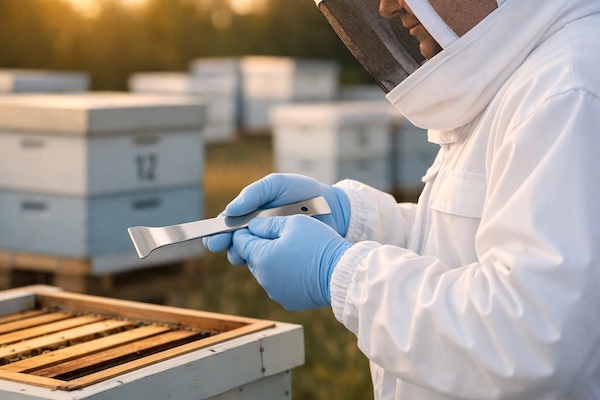
Tools transport from laboratory to apiary in sealed autoclave pouches placed inside rigid, sealable containers. Upon arrival at the apiary, a designated sterile field zone is established on a stainless steel work surface cleaned with 70% isopropyl alcohol. Autoclave pouches open aseptically using the peel-apart technique, and tools transfer directly to the sterile field without contacting non-sterile surfaces.
During inspection operations, tools in active use remain on the sterile field between hive openings. Any tool that contacts soil, vegetation, or non-sterile surfaces immediately returns to the contaminated equipment container for reprocessing. No field re-sterilization occurs. Contaminated tools do not re-enter the sterile field.
End-of-Day Protocol
All tools returning from field operations enter the contaminated equipment stream regardless of their apparent cleanliness. Tools transport back to the processing facility in dedicated contaminated equipment containers that never contact sterile supplies. Upon return, tools immediately enter the pre-sterilization cleaning protocol described in Section 2.
Documentation Requirements
Chain of Sterility Records
Pharmaceutical compliance mandates documented verification of every sterilization cycle. The following records must be maintained for minimum 7 years:
- Autoclave cycle logs with mechanical printouts
- Biological indicator results for each sterilization run
- Tool inventory showing sterilization date and expiration
- Field deployment logs documenting which tool sets serviced which colonies
- Contamination events and corrective actions
- Annual autoclave validation and calibration certificates
Audit Trail Integrity
In the event of a batch rejection due to contamination, documentation allows backward tracing to identify the specific breach in aseptic protocol. This investigative capacity transforms quality control from reactive failure management into proactive process optimization.
Critical Takeaways
- All hive contact tools must be 316-grade stainless steel with no coatings
- Autoclave sterilization requires 121°C for 20 minutes with biological indicator verification
- Smoker fuel must be certified organic with no petroleum-derived materials
- PPE changes between colonies prevent cross-contamination
- Sterile field protocols maintain tool asepsis in field operations
- Documentation provides complete chain-of-sterility traceability