SOP Reference: MWS-M01-L4
Lesson 4: Glyphosate & Pesticide Exclusion
Soil testing and drift management for zero-tolerance contamination control
The Glyphosate Problem
Glyphosate (N-phosphonomethyl glycine) represents the world's most widely used herbicide, with applications spanning agriculture, landscaping, and vegetation management along roads and utility corridors. Its systemic action, broad-spectrum effectiveness, and perceived safety profile have driven adoption across virtually all outdoor managed landscapes.
For pharmaceutical honey production, glyphosate poses multiple contamination pathways. Direct spray drift deposits active ingredient on flowering plants that bees subsequently visit. Soil residues taken up by plant roots concentrate in nectar and pollen. Contaminated water sources expose colonies through drinking water. Even sub-lethal exposure levels that don't kill bees still contaminate honey to levels that fail pharmaceutical testing.
Regulatory agencies continue debating glyphosate's human health risks, but pharmaceutical honey standards operate under zero-tolerance policies. Any detectable glyphosate residue renders honey unsuitable for medical applications, making complete exclusion mandatory.
Multi-Residue Testing Requirements
Testing Panel Scope
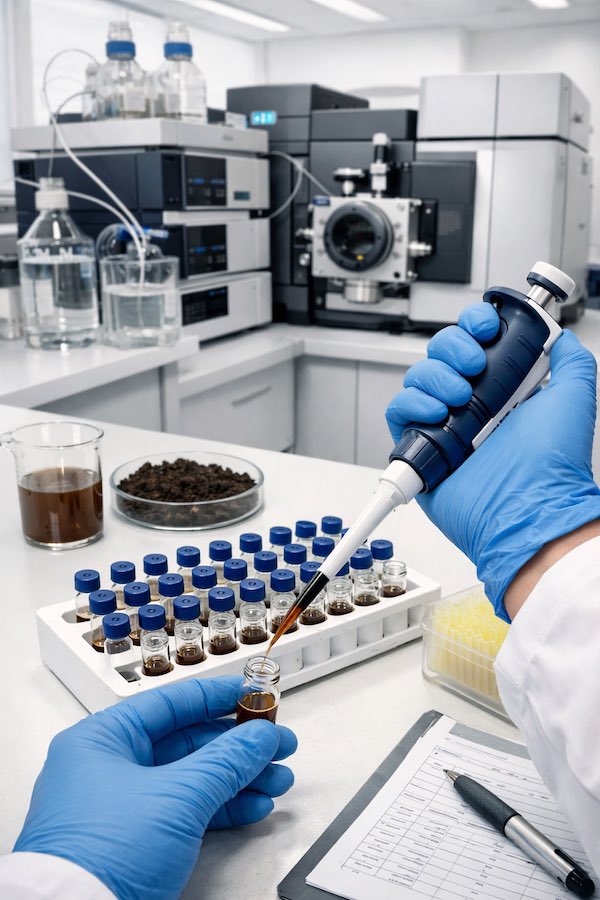
Pharmaceutical honey operations mandate testing for 400+ pesticide compounds across multiple chemical classes. This comprehensive approach captures organophosphates, carbamates, pyrethroids, neonicotinoids, and phenoxy herbicides in addition to glyphosate-specific analysis.
| Pesticide Class | Example Compounds | Detection Method | Action Level |
|---|---|---|---|
| Glyphosate | Glyphosate, AMPA | LC-MS/MS | Non-detect (LOQ 0.01 ppm) |
| Neonicotinoids | Imidacloprid, clothianidin | LC-MS/MS | Non-detect (LOQ 0.001 ppm) |
| Organophosphates | Chlorpyrifos, malathion | GC-MS | Non-detect (LOQ 0.01 ppm) |
| Pyrethroids | Permethrin, cypermethrin | GC-MS | Non-detect (LOQ 0.01 ppm) |
| Fungicides | Mancozeb, azoxystrobin | LC-MS/MS | Non-detect (LOQ 0.01 ppm) |
Sample Matrix Types
Comprehensive contamination surveillance requires testing across multiple environmental matrices. No single sample type captures complete exposure risk.
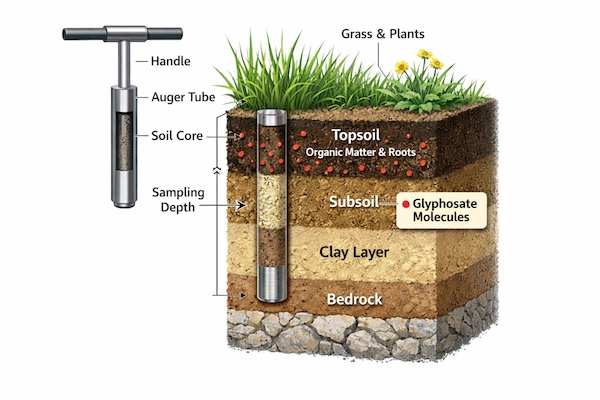
- Soil Samples: Composite samples from multiple depths reveal persistent residues and historical contamination
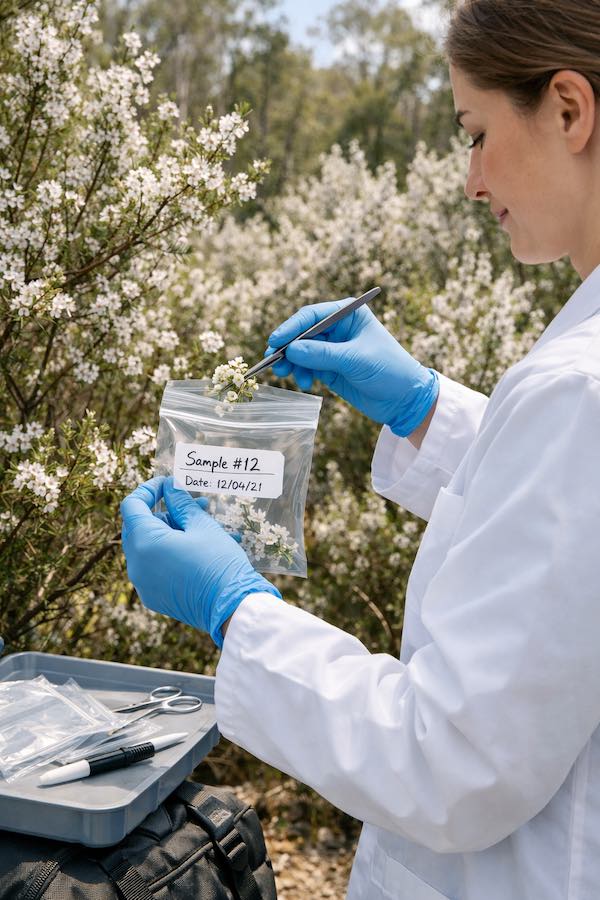
- Vegetation Samples: Flowering plant tissue from within foraging radius demonstrates bioaccumulation
- Water Samples: Surface and groundwater sources test for dissolved pesticides
- Pollen Samples: Corbicular pollen loads directly sampled from foraging bees
- Honey Samples: Finished honey represents the integrated contamination exposure across all pathways
Soil Testing Protocols
Pre-Establishment Baseline
Before hive placement, comprehensive soil testing establishes whether the site carries historical pesticide burdens. Legacy agricultural use leaves persistent residues that slowly release into the current ecosystem.
Sampling Grid and Depth Protocol
- Grid Establishment: 3x3 grid with 50-meter spacing covers the immediate apiary footprint plus surrounding zone
- Sample Point Marking: GPS coordinates and permanent markers identify each sampling location for future resampling
- Depth Increments: Samples collected at 0-15cm, 15-30cm, and 30-60cm depths at each grid point
- Composite Formation: Depth-matched samples from all grid points combine into depth-specific composites
- Quality Control: One duplicate sample and one spiked sample per sampling event verify laboratory accuracy
- Chain of Custody: All samples maintain documented custody from field through analysis completion
Sampling Equipment Decontamination
Cross-contamination between sampling locations produces false-positive results. All sampling equipment undergoes three-stage decontamination between sample points:
- Rinse with tap water to remove gross soil
- Wash with phosphate-free detergent solution
- Triple-rinse with deionized water
- Air dry or wipe with lint-free cloth
Drift Management Strategies
Understanding Spray Drift
Pesticide drift occurs when airborne spray droplets travel beyond the target application area. Drift distance depends on droplet size, release height, wind speed, temperature inversions, and atmospheric stability. Fine droplets under 150 microns can travel several kilometers under adverse conditions.
Even when neighboring properties fall outside the 3km foraging radius, drift from ground applications during temperature inversions can deposit contamination within the buffer zone. Aerial applications pose even greater risk, with drift documented up to 5 kilometers from spray sites.
Physical Drift Barriers
Dense vegetation barriers reduce drift penetration through multiple mechanisms: physical impaction captures droplets, air turbulence creates deposition zones, and droplet evaporation reduces viable distance. Purpose-designed barrier plantings provide superior protection compared to natural vegetation.
| Barrier Type | Recommended Species | Minimum Height | Effectiveness |
|---|---|---|---|
| Windbreak Hedge | Native evergreens | 4 meters | 70-85% drift reduction |
| Multi-layer Buffer | Mixed canopy heights | 6 meters max | 85-95% drift reduction |
| Wooded Corridor | Mature forest | 10+ meters | 95%+ drift reduction |
Temporal Risk Windows
Agricultural spray schedules follow predictable patterns linked to crop phenology. Understanding regional spray timing allows for colony management strategies that minimize exposure during high-risk periods.
Temperature inversions that trap drift close to ground level occur most frequently during evening and nighttime hours when ground cools faster than air aloft. Dawn application timing under inversion conditions maximizes drift distance. Pharmaceutical apiaries located in agricultural regions require meteorological monitoring to identify high-risk application windows.
Neighbor Communication Protocols
Proactive Engagement
Waiting for contamination events to occur before addressing pesticide use with neighbors guarantees regulatory failures and batch rejections. Proactive communication establishes relationships and awareness before problems arise.
Communication Strategy
- Initial Contact: Written introduction explaining pharmaceutical honey production and contamination sensitivity
- Educational Materials: Leave-behind fact sheets describing pesticide impacts on honey purity
- Alternative Solutions: Offer organic land management consulting and cost-sharing for alternative pest control
- Advance Notification Request: Request 72-hour advance notice of any planned pesticide applications
- Incentive Programs: Offer annual payments for maintaining pesticide-free management
- Regular Check-ins: Quarterly contact maintains relationship and awareness
Documentation of Communications
All neighbor contacts receive documentation including dates, attendees, discussion topics, and any agreements reached. This record demonstrates due diligence in contamination prevention and supports regulatory compliance verification.
Vegetation Sampling and Biomonitoring
Sentinel Plant Sampling
Flowering plants within the foraging radius serve as biomonitors for pesticide contamination. Systematic sampling of nectar-producing species provides early warning of contamination events before honey harvest.
Sample Collection Protocol
- Species Selection: Focus on abundant nectar sources that bees visit frequently
- Sample Composition: Composite sample combining flowers from minimum 10 individual plants per species
- Collection Timing: Sample during peak bloom when bee visitation is highest
- Handling: Samples immediately refrigerate or freeze to prevent degradation of pesticide residues
- Laboratory Submission: Ship overnight on ice packs with complete chain of custody
Interpretation of Results
Detectable residues in vegetation samples mandate immediate investigation to identify contamination source. If residues originate from within the 3km buffer zone, the source must be eliminated or the apiary relocated. External sources beyond the buffer zone may require drift barriers, seasonal management adjustments, or site abandonment if contamination persists.
Water Source Contamination Monitoring
Priority Water Sampling
Honeybees consume 200-500 liters of water per colony annually for thermoregulation, brood rearing, and honey dilution. Contaminated water sources introduce pesticides directly into the hive regardless of nectar purity.
Sample Sites and Frequency
| Water Source Type | Sample Frequency | Sample Volume | Priority |
|---|---|---|---|
| Provided Water Stations | Weekly during active season | 500ml | Critical |
| Natural Streams/Ponds | Monthly during active season | 1 liter | High |
| Groundwater Wells | Quarterly | 1 liter | Moderate |
| Rainwater Collection | After significant rain events | 500ml | Moderate |
Response Protocols for Contamination Detection
Immediate Actions
Pesticide detection in any monitoring matrix triggers immediate response to prevent honey contamination and document the event for regulatory reporting.
- Harvest Suspension: All honey harvest operations cease immediately pending investigation
- Source Investigation: Systematic survey identifies contamination origin
- Exposure Assessment: Additional targeted sampling quantifies extent of contamination
- Colony Protection: Temporary feeding with certified organic sugar if foraging restriction necessary
- Documentation: Complete incident report with timeline, analytical results, and corrective actions
- Notification: Inform regulatory contacts and certification bodies within 24 hours
Long-term Corrective Actions
Recurring contamination events indicate systemic problems requiring permanent solutions. Options include enhanced drift barriers, site relocation, legal action against contamination sources, or conversion to lower-grade honey production if pharmaceutical standards cannot be maintained.
Critical Takeaways
- Zero-tolerance policy requires non-detect for 400+ pesticide compounds
- Multi-matrix testing covers soil, vegetation, water, pollen, and honey
- Physical drift barriers provide 70-95% protection from neighboring applications
- Proactive neighbor engagement prevents contamination before it occurs
- Sentinel plant biomonitoring provides early contamination warning
- Contamination detection triggers immediate harvest suspension and investigation