SOP Reference: MWS-M01-L7
Lesson 7: Disease Monitoring Protocols
Varroa and Nosema threshold management without synthetic treatments
The Pharmaceutical Treatment Paradox
Conventional beekeeping relies on synthetic acaricides and antibiotics to manage Varroa destructor mites and bacterial diseases. These chemical treatments accumulate in beeswax at detectable concentrations, slowly releasing into honey over months to years. Pharmaceutical honey destined for wound care cannot contain any synthetic treatment residues, creating an apparent contradiction: how to maintain healthy colonies while prohibiting the standard disease management toolkit.
The solution lies in threshold-based monitoring combined with organic acid treatments, thermal manipulation, and genetic selection for disease resistance. Rather than preventive chemical schedules, pharmaceutical apiaries implement surveillance programs that trigger intervention only when disease pressure exceeds defined thresholds. This approach maintains colony health while preserving honey pharmaceutical eligibility.
Varroa Destructor Monitoring
Understanding Varroa Biology
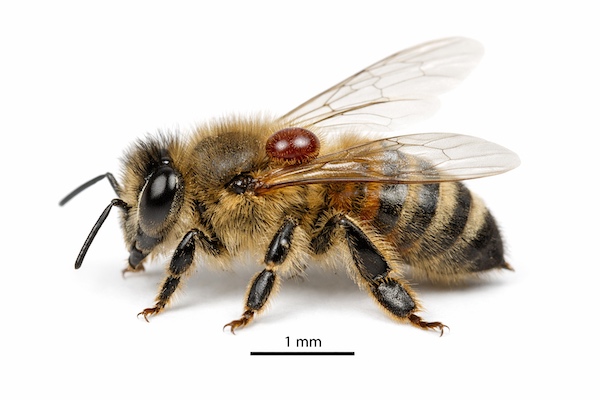
Varroa destructor is an obligate ectoparasite that feeds on bee hemolymph and vectors multiple viruses. Mite reproduction occurs in sealed brood cells, with population doubling times of 25-30 days under optimal conditions. Without intervention, mite populations reach colony-collapsing levels within 2-3 years in temperate climates.
Monitoring Techniques
Multiple sampling methods quantify mite infestation levels. Each technique has specific advantages and limitations for pharmaceutical operations.
| Method | Sample Size | Accuracy | Frequency |
|---|---|---|---|
| Alcohol Wash | 300 bees | ±2% at 95% confidence | Monthly |
| Sugar Roll | 300 bees | ±3% at 95% confidence | Monthly |
| Sticky Board | 72-hour drop | Qualitative trend data | Continuous |
| Drone Brood Inspection | 100 cells | ±5% at 90% confidence | During drone season |
Alcohol Wash Protocol
- Sample Collection: Collect 300 nurse bees from brood frames using bee brush into wide-mouth jar
- Alcohol Addition: Add 70% isopropyl alcohol to cover bees (approximately 200ml)
- Agitation: Shake vigorously for 60 seconds to dislodge mites from bees
- Filtration: Pour through mesh screen (8-mesh hardware cloth) to separate mites from bees
- Mite Count: Count mites in white-bottom collection pan
- Calculation: Divide mite count by 300 and multiply by 100 for percent infestation
Action Thresholds
Treatment decisions trigger at specific infestation levels based on season and colony strength.
| Season | Treatment Threshold | Rationale |
|---|---|---|
| Spring (March-May) | Above 2% infestation | Prevent exponential growth during buildup |
| Summer (June-August) | Above 3% infestation | Colony can tolerate slightly higher levels |
| Fall (September-November) | Above 1% infestation | Critical to reduce mites on winter bees |
| Winter (December-February) | No monitoring - treat in fall | Cluster disturbance causes harm |
Organic Acid Treatments
Formic Acid Application
Formic acid (methanoic acid) occurs naturally in honey at low concentrations. Applied at therapeutic concentrations, formic acid vapor penetrates sealed brood cells and kills mites without leaving residues that compromise pharmaceutical status.
Formic Acid Protocol
- Product: 65% formic acid gel strips or liquid formulations
- Application Temperature: 10-30°C ambient temperature for proper vaporization
- Dosage: Follow manufacturer guidelines for colony size and temperature
- Duration: 14-21 day treatment period
- Efficacy: 60-90% mite mortality including mites in capped brood
- Residue Profile: No detectable increase above natural honey formic acid levels
Oxalic Acid Treatment
Oxalic acid (ethanedioic acid) also occurs naturally in honey. Applied as sublimated vapor or sugar solution, oxalic acid kills phoretic mites on adult bees but does not penetrate capped brood.
Oxalic Acid Vaporization Protocol
- Timing: Apply when colony is broodless or brood levels minimal (late fall through early winter)
- Dosage: 1 gram crystalline oxalic acid per brood chamber
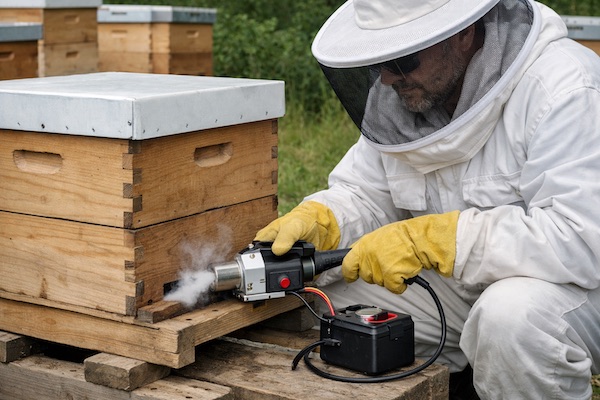
- Equipment: Electric vaporizer designed for beekeeping applications
- Application: Insert vaporizer into hive entrance, heat oxalic acid to sublimation
- Seal Duration: Close hive entrance for 10 minutes to retain vapor
- Treatment Frequency: Single application or 3 applications at 5-day intervals
- Efficacy: 90-95% of phoretic mites when applied to broodless colonies
Oxalic Acid Dribble Method
Alternative application dissolves oxalic acid in sugar syrup and dribbles solution directly onto bee clusters between frames. This method works when ambient temperature precludes vaporization.
- Solution Preparation: 3.5g oxalic acid per 100ml 1:1 sugar:water syrup
- Dosage: 5ml per seam of bees
- Application: Dribble slowly along top bars between frames
- Temperature: Effective at temperatures as low as 5°C
Thermal Mite Control
Hyperthermia Treatment Principles
Varroa mites have narrower thermal tolerance than honeybees. Controlled heating to 42°C for extended periods kills mites while bees survive through thermoregulatory behavior. Thermal treatment penetrates sealed brood cells where organic acids have limited effect.
Commercial Heating Systems
Purpose-built thermal treatment chambers maintain precise temperature control while monitoring colony stress indicators. Commercial systems typically use convection heating with humidity control to prevent desiccation.
Treatment Protocol
- Pre-Treatment Assessment: Verify colony strength sufficient to tolerate thermal stress
- Chamber Preparation: Pre-heat treatment chamber to target temperature
- Colony Transfer: Move complete hive into heating chamber
- Temperature Ramp: Gradually increase to 42°C over 30 minutes
- Treatment Duration: Maintain 42°C for 120-150 minutes
- Cooling Phase: Gradual temperature reduction over 30 minutes
- Recovery Period: Allow 24-hour rest before hive manipulation
Efficacy and Limitations
| Parameter | Performance |
|---|---|
| Mite Mortality | 85-95% all life stages |
| Brood Survival | 95-98% when properly controlled |
| Queen Survival | 99% with proper protocol |
| Treatment Frequency | Maximum 3 times per season |
| Equipment Cost | High initial investment |
Nosema Disease Monitoring
Nosema ceranae vs Nosema apis
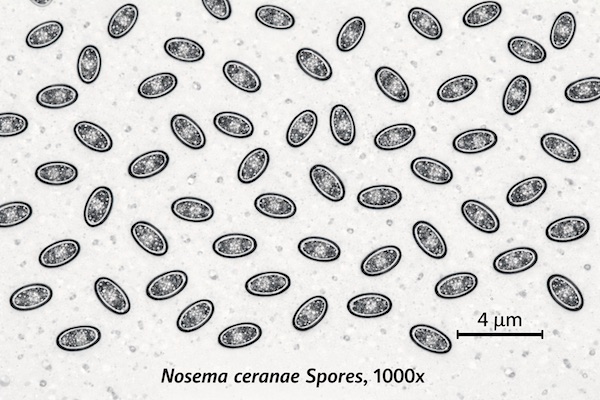
Two Nosema species infect honeybees: N. apis (traditional species) and N. ceranae (emerging species). Both are microsporidian fungi that colonize midgut epithelium, impairing nutrient absorption and shortening bee lifespan. N. ceranae has largely displaced N. apis in many regions and shows less obvious symptoms, making laboratory diagnosis essential.
Sample Collection for Nosema Testing
- Sample Size: Collect 30 forager bees from hive entrance
- Preservation: Place in 70% ethanol or freeze if processing within 24 hours
- Sample Frequency: Test in early spring and late fall when prevalence peaks
- Laboratory Analysis: Submit to laboratory for spore count and species identification
Field Spore Count Protocol
Experienced beekeepers can perform field spore counts using basic microscopy:
- Remove abdomens from 30 bees, place in 30ml distilled water
- Macerate abdomens thoroughly to release gut contents
- Filter through cheesecloth to remove debris
- Place drop of suspension on hemocytometer
- Count spores in defined grid squares under 400x magnification
- Calculate spores per bee using hemocytometer formula
Treatment Thresholds
| Spore Count (million/bee) | Infection Level | Action Required |
|---|---|---|
| Below 1 million | Low/subclinical | Monitor only |
| 1-5 million | Moderate | Consider treatment, increase monitoring |
| Above 5 million | Heavy/clinical | Immediate treatment required |
Pharmaceutical-Approved Nosema Management
Conventional Nosema treatment uses fumagillin, an antibiotic that leaves detectable residues disqualifying honey for pharmaceutical use. Pharmaceutical apiaries rely on alternative management strategies.
- Nutritional Support: Ensure adequate protein nutrition through natural pollen availability
- Thymol Supplementation: Feed thymol-infused sugar syrup (not during honey flow)
- Colony Requeening: Replace queens in heavily infected colonies with resistant genetics
- Equipment Sanitation: Sterilize frames and equipment from infected colonies before reuse
- Genetic Selection: Maintain breeding stock showing natural Nosema resistance
American Foulbrood Surveillance
The Pharmaceutical Dealbreaker
American foulbrood (AFB), caused by Paenibacillus larvae, represents the most serious bacterial disease of honeybees. AFB-infected colonies require destruction under most regulatory frameworks, and spores persist in equipment for decades. Any AFB detection terminates pharmaceutical honey production from affected apiaries.
Visual Inspection Protocol
Monthly brood inspections screen for AFB symptoms throughout the active season.
- Spotty Brood Pattern: Irregular capping pattern with mixture of capped and empty cells
- Sunken Cappings: Depressed or punctured cell caps over diseased larvae
- Discolored Larvae: Brown, coffee-colored scales in cell bottoms
- Ropiness Test: Insert toothpick into suspicious cells; AFB larval remains form rope when pulled
- Foul Odor: Characteristic rotten smell in heavily infected colonies
Laboratory Confirmation
Any suspected AFB case undergoes laboratory confirmation before treatment decisions. Collect samples of suspicious brood and submit to diagnostic laboratory for culture-based or molecular identification.
Response to Positive Detection
AFB-positive colonies cannot continue in pharmaceutical honey production. Options include:
- Colony destruction and equipment sterilization (standard regulatory requirement)
- Complete removal of all equipment from pharmaceutical apiary
- Conversion to non-pharmaceutical production with antibiotic treatment (equipment never returns to pharmaceutical use)
Documentation and Record Keeping
Disease Monitoring Records
Comprehensive documentation demonstrates proactive disease management and provides evidence of pharmaceutical compliance.
Required Documentation
- Monthly mite monitoring results by colony
- Treatment applications with dates, products, dosages
- Post-treatment efficacy assessments
- Nosema test results with spore counts
- AFB inspection findings and any suspicious observations
- Laboratory diagnostic reports
- Equipment sterilization records
- Queen replacement and genetic selection records
These disease management records integrate with overall pharmaceutical honey documentation, demonstrating that honey originated from healthy colonies managed without prohibited synthetic treatments.
Critical Takeaways
- Threshold-based monitoring triggers organic acid treatment at 1-3% Varroa infestation depending on season
- Formic acid and oxalic acid provide effective mite control without pharmaceutical-disqualifying residues
- Thermal treatment at 42°C achieves 85-95% mite mortality including brood-stage mites
- Nosema monitoring uses spore counts with treatment threshold at 5 million spores per bee
- American foulbrood detection terminates pharmaceutical honey production from affected colonies
- Comprehensive disease records demonstrate pharmaceutical compliance and proactive management